
Driving With OCD: How Obsessive-Compulsive Disorder Can Affect Driving Safety
For some people with obsessive-compulsive disorder (OCD), ordinary uncertainty on the road can grow into an intrusive fear that demands an answer. A driver might repeatedly check the mirrors, become distracted by a previous intersection, or feel compelled to retrace a route. While these responses can provide temporary relief, the International OCD Foundation (IOCDF) warns that they can also compete with the attention needed for what is happening ahead.
Home | Driving With OCD: How Obsessive-Compulsive Disorder Can Affect Driving Safety
OCD symptoms can affect driving ability, but a diagnosis alone is not proof that someone is unsafe. Many people with OCD drive safely every day. OCD is a commonly misunderstood condition, but research can better explain how this condition impacts driving ability. Harding Mazzotti is committed to supporting education efforts that improve roadway safety and support accident prevention.
What Is Obsessive-Compulsive Disorder (OCD)?
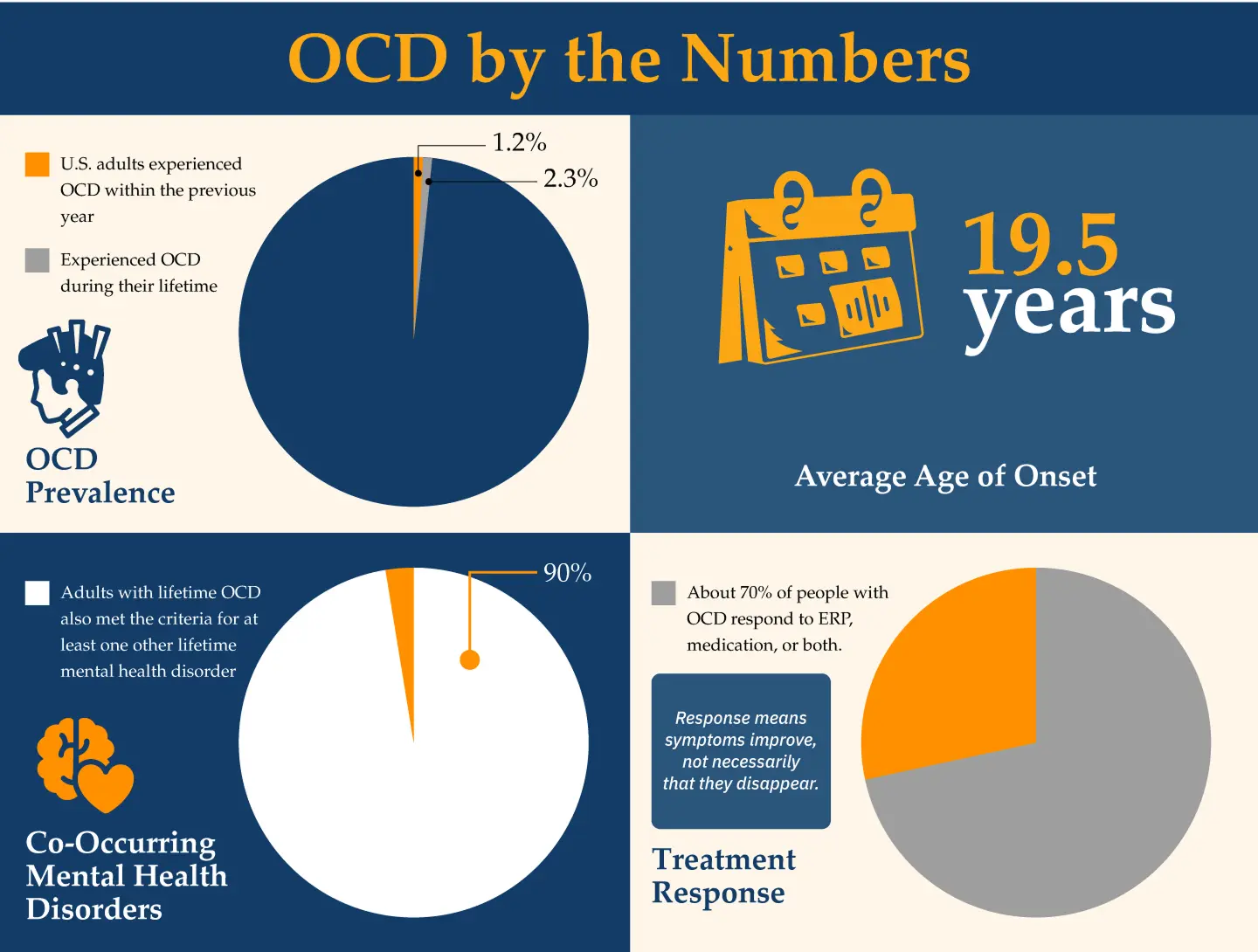
The IOCDF defines OCD as a mental health condition built around a cycle of obsessions and compulsions. Roughly 2.3% of the population experiences OCD at some point in their lives.
- Obsessions: Unwanted thoughts, images, or urges that cause distress
- Compulsions: Physical actions or mental rituals performed to ease that distress or prevent a feared outcome
Any relief from compulsions is often temporary, allowing the cycle to begin again. OCD can center on many themes, referred to as subtypes. These can include:
- Contamination, including emotional contamination
- Responsibility or accidental harm
- Perfectionism, symmetry, or a need for things to feel “just right”
- Sex or identity
- Relationships
- Religion or morality, also called scrupulosity
- Death or past events
These aren’t rigid categories. Symptoms can overlap, change over time, and affect each person differently. OCD is more than neatness or ordinary double-checking. Its symptoms can consume time and energy, and add stress to familiar routes.

How OCD Symptoms Can Affect Driving
Driving can become difficult when the need for certainty competes with the attention required by changing traffic conditions.
When Intrusive Thoughts Take Over Behind the Wheel
A routine moment on the road can suddenly feel frightening. After driving over a pothole, someone with OCD might wonder whether they hit a pedestrian. A brief hesitation at an intersection could leave them convinced that they made a dangerous mistake. Some intrusive thoughts may also involve vivid, disturbing images of causing harm.
These thoughts are unwanted and don’t reflect the driver’s intentions. Trouble can arise when trying to disprove them, as it takes the driver’s attention away from the road.
Repeated Checking and Reassurance-Seeking
Intrusive doubt can trigger a strong urge to check and recheck various aspects to reassure a driver with OCD. Someone with OCD may:
- Check mirrors repeatedly
Circle back to intersections - Return to real or imagined accident scenes
- Review dashcam footage or accident reports
Although checking may bring brief relief, the doubt tends to return. Repeated mirror checks or attempts to retrace a route can also draw attention away from current traffic conditions and hazards.
Perfectionism and Decision Paralysis While Driving
Some drivers with OCD feel pressure to drive perfectly. A minor mistake, such as hesitating at a turn or parking unevenly, may linger and cause them to doubt their judgment.
That pressure can make even routine choices harder. Someone may wait too long to merge or repeatedly reconsider whether it is safe to turn. In some situations, they may freeze while searching for complete certainty. Caution matters, but safe driving also requires timely decisions.
When Anxiety and Mental Fatigue Divide Attention
OCD can make driving mentally exhausting. Part of the driver’s attention remains on the road, while another part is spent reviewing intrusive thoughts, resisting compulsions, or seeking reassurance.
As the strain builds, the person may feel increasingly stressed or panicked. They can also have trouble concentrating on the next traffic situation because their mind is still caught on the last one. The longer this cycle continues, the harder it can become to stay fully present behind the wheel.
What Research Shows About OCD and Driving
OCD studies can tell us how the condition affects cognition and daily functioning, but only a small amount of research has measured real-world driving outcomes. While research findings can provide evidence about groups, these case studies cannot predict how any one person will drive.
When Anxiety and Mental Fatigue Divide Attention
The largest OCD-specific study published in Social Psychiatry and Psychiatric Epidemiology tracked more than 5.7 million adults in Sweden. Women with OCD initially showed a small increase in serious transport accidents, but the difference weakened after researchers considered co-occurring conditions and disappeared in sibling comparisons. Men showed no increase, and neither group had significantly more traffic convictions. The study could not confirm who drove, held a license, or how often participants were on the road. It also cannot establish a crash rate for U.S. drivers with OCD.
U.S. studies discussed in the Journal of Anxiety Disorders concluded that anxiety can contribute to exaggerated caution and other changes behind the wheel, although this research isn’t specific to OCD. A broader review also found no consistent link between psychiatric diagnoses and crash risk. Together, these studies show why current evidence cannot support broad claims about OCD and crash risk.
How OCD May Affect Decisions and Reaction Time
A review of 110 studies found that, as a group, participants with OCD performed differently on tasks involving executive function. In one decision-making study, participants with OCD also took longer to respond while remaining as accurate as the control group. These findings could help explain why some people experience hesitation or mental overload. However, laboratory tasks don’t establish how quickly someone will react while driving.
What Driving-Anxiety Research Shows About Performance and Avoidance
A review of driving-anxiety research conducted by the National Library of Medicine linked greater anxiety with more cautious behavior, distress behind the wheel, and driving avoidance. However, 17 of the 18 studies examining driving behavior relied on surveys or interviews rather than observed performance. The findings apply to driving anxiety generally, not OCD specifically. They still help explain why someone might avoid highways, unfamiliar routes, or driving alone when anxiety becomes difficult to manage. Reliable statistics on driving avoidance among people with OCD aren’t currently available.

What Driving Situations Can Trigger OCD Symptoms?
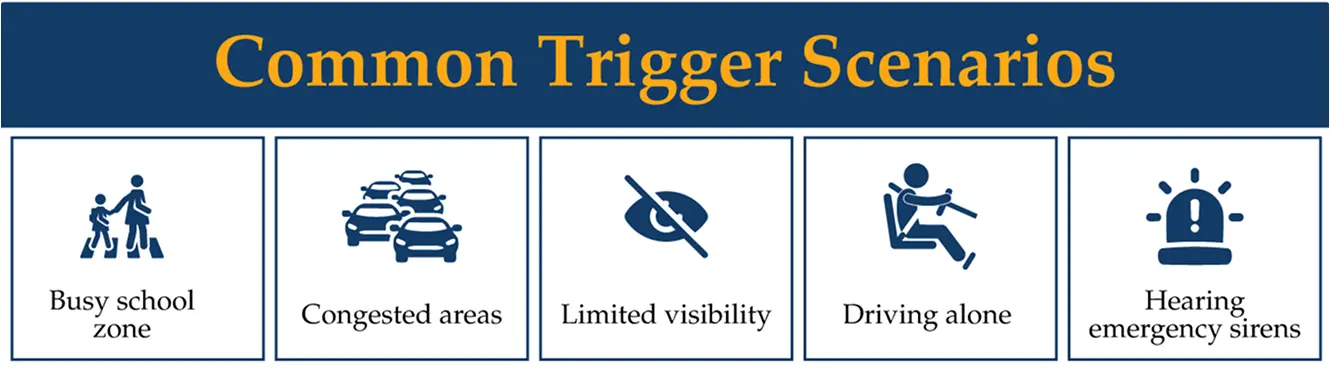
Certain road conditions create more room for doubt. For example, in a busy school zone or crowded parking lot, someone may fear they overlooked a pedestrian. Congested areas that require quick decisions can later be questioned or replayed. Limited visibility may also make it harder to feel certain about what happened on the road.
Other triggers have less to do with road conditions. For example, driving alone means there’s no passenger to offer reassurance. Hearing emergency sirens can lead someone to fear that responders are headed toward an accident they failed to notice. What causes intense doubt for one person may not affect someone else in the same way.
Can People With OCD Drive Safely?
Many people with OCD drive safely. A diagnosis alone doesn’t determine someone’s ability behind the wheel because symptoms vary from person to person. What matters more is whether the person’s current symptoms interfere with attention, decisions, or behavior while driving.
Treatment can make driving feel more manageable. An OCD-trained therapist can help someone approach driving fears gradually and help avoid turning coping strategies into new rituals. Medication may also reduce symptoms for some people. Family, friends, and support groups can encourage progress without repeatedly offering reassurance.
How to Manage OCD Symptoms While Driving
These strategies can support treatment and help prevent symptoms from taking over a drive:
- Follow the treatment plan developed with a licensed mental health professional.
- Practice driving-related ERP gradually with an OCD-trained therapist. Exercises should never involve unsafe driving.
- Start with manageable trips, then work toward more challenging situations as confidence grows.
- Choose a route before leaving, but avoid changing it solely to quiet an OCD-driven doubt.
- Reduce ordinary distractions, such as phones or loud music.
- Recognize personal triggers and resist circling back, repeatedly checking mirrors, or asking passengers for reassurance.
- When an intrusive thought appears, return attention to the road rather than mentally replaying what just happened.

OCD and Driving: Common Myths and Facts
| Myth | Fact |
| People with OCD shouldn’t drive. | OCD is not an automatic barrier to driving. What matters is how the individual’s current symptoms affect attention or behavior. |
| Intrusive thoughts predict dangerous behavior. | Intrusive thoughts are unwanted and distressing. They don’t reflect what someone intends or wants to do. |
| Repeated checking makes a driver safer. | Compulsive mirror checks, circling back, or replaying a route can divide attention and reinforce the cycle of doubt. |
| OCD is simply extreme caution. | OCD involves obsessions and compulsions that can cause significant distress. It isn’t the same as being a careful driver. |

OCD Does Not Define Someone’s Ability to Drive Safely
An OCD diagnosis is not a verdict on someone’s driving ability, and making assumptions about people suffering from OCD can be harmful and unnecessary. However, better information can help drivers recognize when symptoms deserve professional support and encourage safer decisions.
Harding Mazzotti is committed to making road safety information more useful and accessible. If a collision leaves someone injured, the firm’s car accident lawyers can explain their legal options and help them decide what to do next.